Introduction
foods to avoid in pregnancy, otherwise carry consequences that extend well beyond the mother's own health. Every meal contributes or fails to contribute to a developing nervous system, a forming skeleton, and organs that will function across an entire lifetime. That is not a reason for anxiety. It is a reason for paying slightly more attention to what ends up on the plate each day.
The Nutrients That Cannot Be Negotiated
Protein builds. Every cell in a developing baby requires brain tissue, muscle, organ walls, and the placenta itself. Women who eat inadequate protein during pregnancy compromise foetal development in ways that neither supplementation nor postnatal pregnancy nutrition in rajkot can fully correct. Dal, eggs, curd, paneer, nuts, and legumes provide reliable daily protein within most Indian dietary patterns without requiring dramatic changes to existing eating habits.
Iron is the nutrient most commonly deficient in pregnant women across India, and its consequences are among the most significant. Inadequate iron reduces oxygen supply to the foetus, slows foetal growth, and leaves the mother exhausted in ways that compound every other challenge pregnancy presents. Spinach, methi, beetroot, dates, and iron-rich lentils consumed alongside vitamin C sources are tomato, amla, and lime significantly improve iron absorption from food.
Calcium is drawn heavily from maternal reserves during foetal skeletal development. A mother who does not consume adequate calcium does not protect her baby from deficiency; she absorbs it from her own bones instead. Dairy, ragi, sesame seeds, and green leafy vegetables provide dietary calcium consistently across the pregnancy.
Folate, particularly during the first trimester, supports neural tube closure, the process that determines spinal cord formation. Green vegetables, lentils, and citrus provide dietary folate that works alongside the prescribed supplement rather than being replaced by it.
Building a Daily Plate That Works
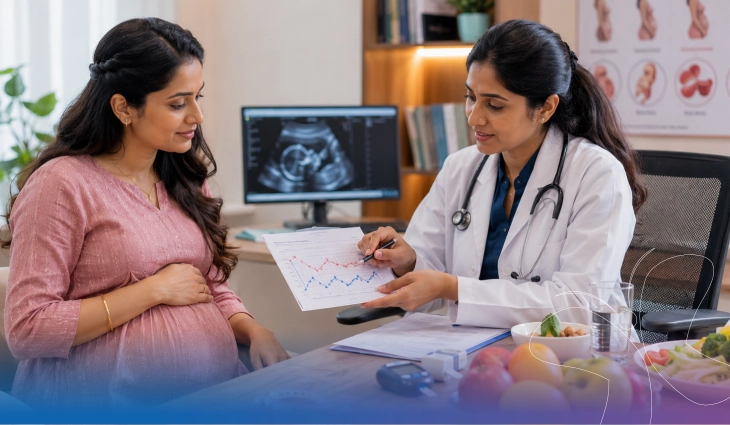
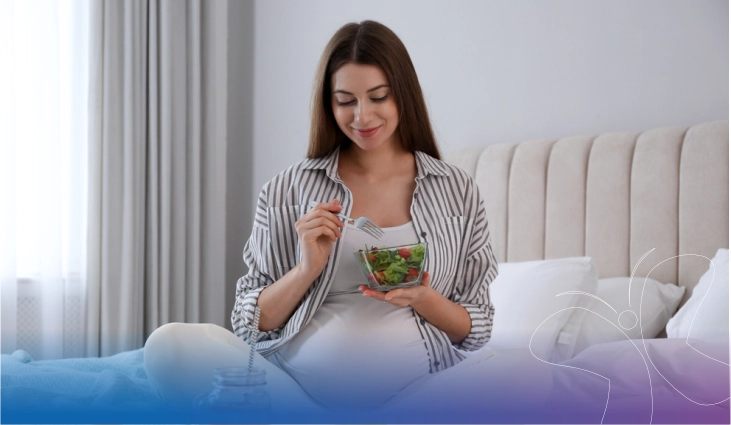
A pregnancy diet chart India dietitians recommend does not look dramatically different from a well-balanced Indian meal pattern; it simply prioritises certain elements more deliberately.
Whole grains over refined ones. Fresh seasonal fruit over packaged juice. Home-cooked dal and sabzi over processed alternatives. Curd or milk daily. A small handful of nuts and seeds as a snack rather than biscuits or chips.
Small, frequent meals five or six across the day rather than three large ones manage nausea in the first trimester and reflux in the third more effectively than any medication does. They also maintain steadier blood sugar levels, which affects energy, mood, and gestational diabetes risk simultaneously.
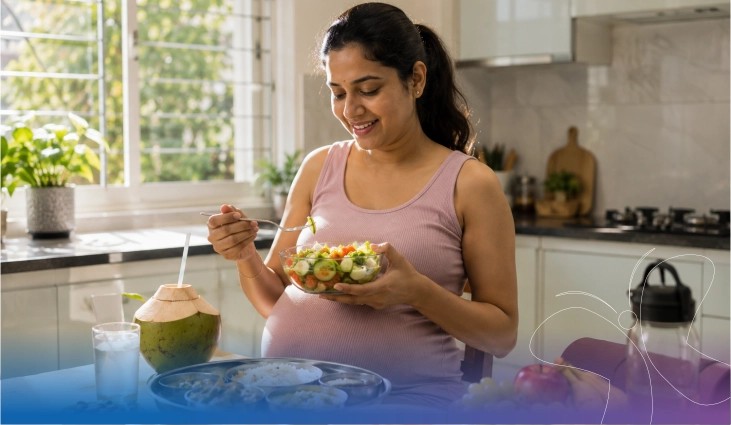
Hydration matters as much as food. Water supports amniotic fluid levels, kidney function, and digestion in ways that become obvious when intake drops. Eight to ten glasses daily more in warm weather is the practical minimum. Coconut water and buttermilk add electrolytes usefully. Sugary drinks and excessive chai are not substitutes.
What Genuinely Warrants Avoiding
Raw and undercooked meat, fish, and eggs carry bacterial and parasitic risks that a healthy adult manages without consequence but that carry serious implications during pregnancy. Cook everything thoroughly without exception.
Caffeine above one cup of coffee or equivalent daily is associated with reduced foetal growth across multiple studies. This includes cola drinks and energy drinks that many women do not count when monitoring caffeine intake.
Packaged and ultra-processed foods contribute excess salt, refined sugar, and additives that displace genuinely nutritious food without adding nutritional value. They are not categorically dangerous in small amounts but they consistently crowd out what the body actually needs during these months.
Unpasteurised dairy, raw sprouts, and food prepared in uncertain hygiene conditions carry contamination risks that are simply not worth taking when the consequences extend to a developing baby.
Conclusion
A healthy diet for pregnant women is built on consistency rather than perfection. The same sound choices made daily protein at every meal, iron-rich foods regularly, adequate calcium, sufficient hydration, and avoidance of the categories that carry genuine risk provide the nutritional environment a developing baby needs across all nine months.
No supplement replaces food. No occasional healthy meal compensates for a predominantly poor diet. What matters is the pattern, maintained with intention across the full length of the pregnancy.