Introduction
Most babies born at full term in good condition are handed to their mothers within minutes, and that is how the first hours should go. But a significant proportion of newborns, approximately 10–15% in India, require admission to a higher level of care at some point in the first days of life, and parents who understand why such situations happen are better equipped to engage with the clinical team, make informed decisions, and manage the fear that an unexpected NICU admission produces. A NICU is not a place where things have gone wrong beyond recovery; it is a clinical environment designed to bridge the gap between a baby's current physiological capability and what independent survival requires. Understanding which conditions require that bridge, what the NICU actually provides, and how premature baby care differs from routine newborn care turns an intimidating experience into a comprehensible one.
Overview: What Separates Routine and Intensive Newborn Care
Routine newborn care covers the healthy, term baby who has made the transition from intrauterine to extrauterine life without difficulty breathing room air independently, maintaining body temperature, feeding from breast or bottle, and showing no signs of infection or structural abnormality. These babies receive examinations, vitamin K injections, screening tests, and observation, and go home with their mothers within 24–72 hours. A neonatal intensive care unit is for babies who cannot yet manage one or more of those functions independently: breathing, temperature regulation, feeding, or infection resistance. The NICU provides the technological and clinical support that substitutes for the baby's underdeveloped or compromised physiology until it matures or recovers. The distinction is physiological readiness, not severity of illness in the dramatic sense, but the gap between what the baby's systems can currently do and what survival requires.
When a Baby Needs NICU Admission
Premature birth — the most common reason
A baby born before 34 weeks will almost certainly require NICU admission; a baby born between 34 and 37 weeks may or may not, depending on clinical status. The fundamental problem of prematurity is organ immaturity lungs that lack sufficient surfactant to maintain alveolar inflation, a gut that cannot yet coordinate the suck-swallow-breathe sequence required for oral feeding, a thermoregulatory system that cannot maintain body temperature in room air, and an immune system with inadequate immunoglobulin reserves. Premature baby care addresses each of these in sequence: surfactant replacement therapy and respiratory support for the lungs, gavage or nasogastric tube feeding while oral feeding matures, incubator care for thermoregulation, and infection monitoring throughout. The gestational age at birth determines which combination of support will be needed and for approximately how long.
Respiratory distress syndrome
Respiratory distress in the first hours of life, grunting, nasal flaring, intercostal recession, and tachypnoea are the clinical presentations of surfactant deficiency or retained lung fluid, and they require prompt assessment and intervention. Mild cases resolve with supplemental oxygen. Moderate to severe cases require continuous positive airway pressure (CPAP) or mechanical ventilation, administered and monitored in a NICU setting. Respiratory distress syndrome is the leading cause of death in preterm infants globally; in facilities with functioning NICU infrastructure, it is highly survivable with appropriate management.
Low birth weight and growth restriction
Babies born weighing less than 2,500 g whether because of preterm birth or intrauterine growth restriction in a term baby face specific challenges: hypoglycaemia from inadequate glycogen stores, hypothermia from low body fat, feeding difficulty, and increased infection susceptibility. The NICU monitors blood glucose every few hours in the early period, provides supplemental warmth, initiates tube feeding where oral feeds are insufficient, and screens for sepsis. Small-for-gestational-age babies who are term but growth-restricted require the same metabolic vigilance even though their organ maturity may be close to normal.
Neonatal infection and sepsis
Newborns have the lowest infection threshold of any patient population. Group B Streptococcus, E. coli, and Listeria are the most common organisms in early-onset neonatal sepsis (within 72 hours of birth); late-onset sepsis in NICU babies is dominated by coagulase-negative Staphylococci and Klebsiella. The clinical signs are non-specific — poor feeding, temperature instability, lethargy, or just "not looking right" in the parent's assessment — which is why a low threshold for investigation and empirical antibiotic therapy is the appropriate response. The neonatal intensive care unit provides the blood culture, lumbar puncture, inflammatory marker monitoring, and IV antibiotic administration that early sepsis management requires.
Birth asphyxia and hypoxic-ischaemic encephalopathy
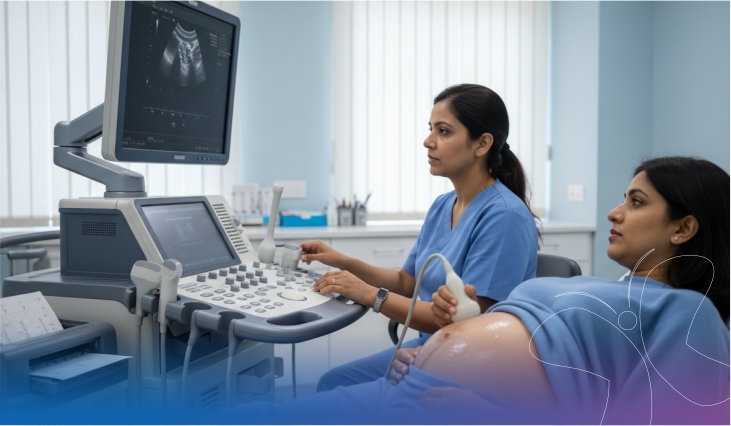
When a baby experiences oxygen deprivation around the time of birth, the brain is the organ most vulnerable to injury. Moderate to severe hypoxic-ischaemic encephalopathy (HIE) is now treated with therapeutic hypothermia controlled cooling to 33–34°C for 72 hours which reduces the extent of secondary neuronal death and significantly improves neurodevelopmental outcomes. This intervention requires a specialist NICU with cooling equipment and continuous neurological monitoring. It must be initiated within six hours of birth and is only available at level II or level III facilities. A facility without cooling capability cannot provide this treatment, which is one concrete reason why delivering at a hospital with a capable NICU in Rajkot improves outcomes for at-risk deliveries.
Congenital abnormalities requiring early intervention
Congenital heart disease, tracheo-oesophageal fistula, omphalocele, and neural tube defects are among the structural abnormalities that present in the newborn period and require NICU stabilisation prior to surgical or medical management. Some are identified on antenatal scanning and the NICU admission is planned; others are identified at birth or in the first hours of life and require emergency assessment. The NICU provides the monitoring, vascular access, respiratory support, and specialist coordination that these babies need before definitive treatment.
Levels of Neonatal Care
Not all NICUs are equivalent. Neonatal care is stratified into levels that reflect the complexity of care available:
- Level I (Normal Newborn Nursery): Healthy term infants; basic resuscitation; no intensive care capability
- Level II (Special Care Nursery): Babies 32 weeks and above who need monitoring, oxygen, phototherapy, and IV fluids but not ventilation
- Level III (NICU): Full mechanical ventilation, invasive monitoring, surgical support, extremely preterm infants (below 28–32 weeks)
- Level IV (Regional NICU): Cardiac surgery, complex surgical procedures, ECMO available only at major referral centres
Knowing which level a facility provides is practically important: a baby born at 28 weeks in a Level II hospital needs to be transferred to a Level III centre, and the time taken for that transfer has direct clinical consequences. The best child hospital in Rajkot for a high-risk delivery is the one whose NICU level matches the anticipated clinical need which can be assessed prenatally in most high-risk pregnancies.
What Premature Baby Care Involves Day to Day
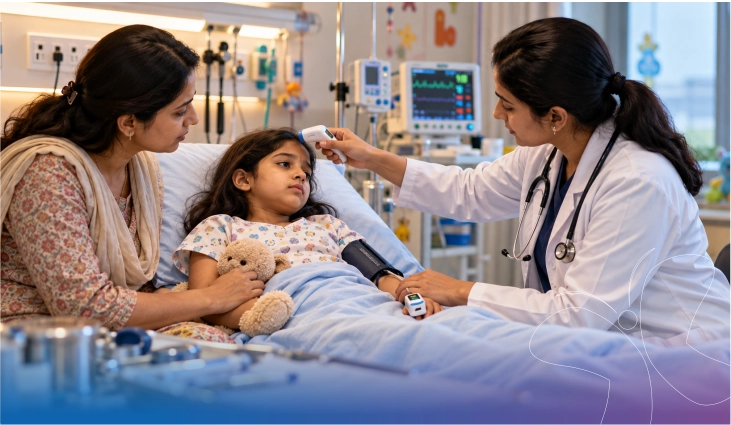
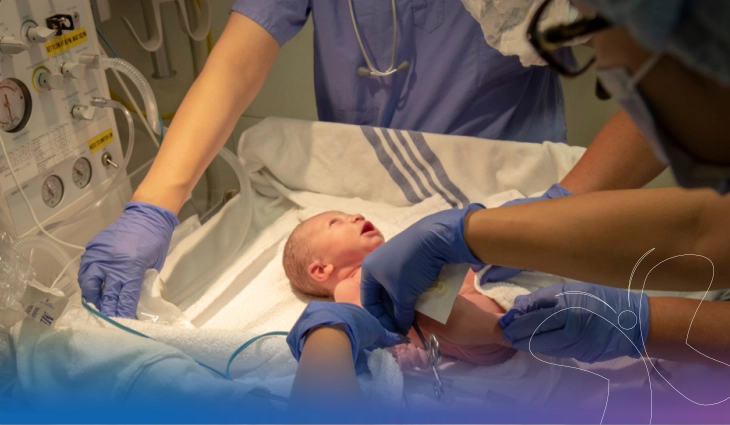
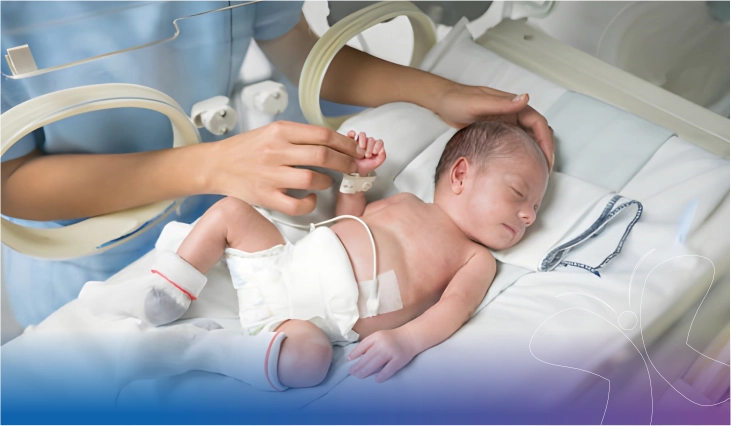
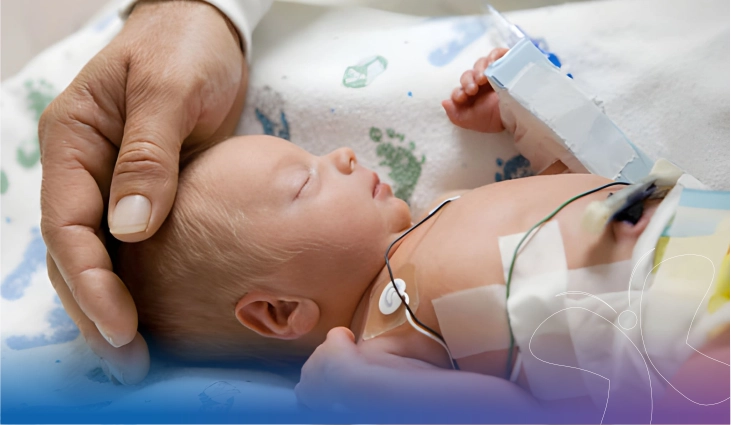
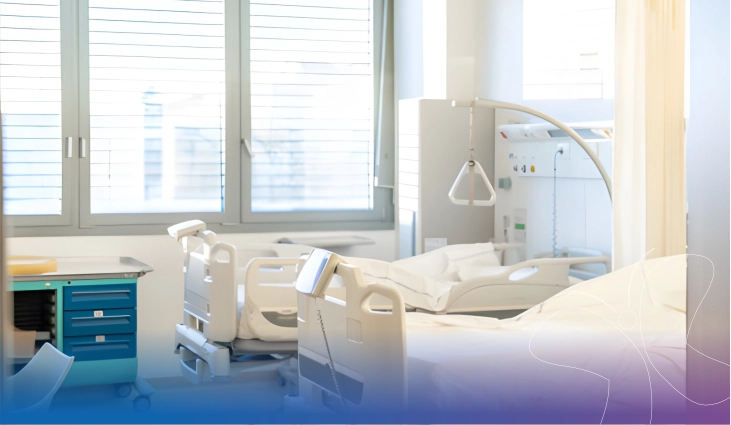
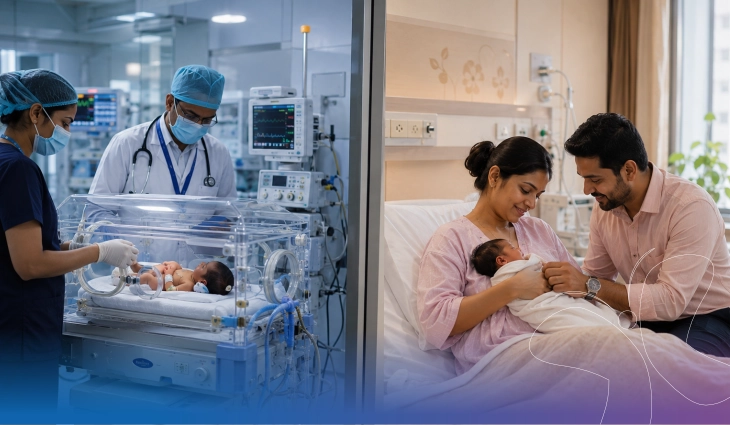
Parents whose babies are admitted for premature baby care often find the NICU environment initially overwhelming the monitors, the lines, the incubator, and the restricted access. Understanding what is happening practically helps. The daily NICU cycle for a preterm infant typically involves:
- Vital sign monitoring every 1–4 hours depending on stability
- Tube feeds every two to three hours, transitioning to oral feeds as sucking matures (typically around 34 weeks corrected gestation)
- Incubator temperature adjustment to maintain skin temperature at 36.5°C
- Blood gas monitoring if respiratory support is being weaned
- Daily weight measurement and growth plotting
- Skin-to-skin (kangaroo) care for stable babies a non-optional part of developmental care with specific evidence for improved outcomes, including faster discharge
- Screening for retinopathy of prematurity (eye examination from 31 weeks corrected gestation) and intraventricular haemorrhage (cranial ultrasound)
Expert Tips for Parents Navigating the NICU
- Ask for a daily update at a consistent time — NICU teams have information; the challenge is communication during busy clinical periods; requesting a specific daily briefing time establishes a reliable information channel without requiring parents to intercept passing staff.
- Practice skin-to-skin contact as early and as consistently as the team allows — kangaroo care reduces apnoea episodes, stabilises heart rate and temperature, improves milk supply, and shortens NICU stay; it is not a comfort measure in addition to treatment, it is part of treatment.
- Start expressing breast milk from within six hours of delivery even if the baby cannot feed yet — colostrum and breast milk provide immune protection that formula cannot replicate; early and frequent expression establishes supply before the baby can feed directly; NICU nurses can advise on technique and storage.
- Learn to read the monitors without being driven by every alarm — NICU monitors are sensitive and alarm frequently; nurses can distinguish clinically significant alarms from self-resolving artefacts. Asking the nurse to explain which alarms require action and which do not reduces parental anxiety without reducing vigilance.
- Attend ward rounds if the team permits — hearing the clinical discussion directly, including plans for the day and the criteria for the next step (extubation, transition to oral feeds, discharge preparation), gives parents a more accurate picture than second-hand summaries.
- Arrange support at home before discharge — premature infants go home before they reach the developmental milestone equivalent of a term birth; parents need more support in the first weeks at home than families with term babies, and arranging that support before discharge is less stressful than organising it reactively.
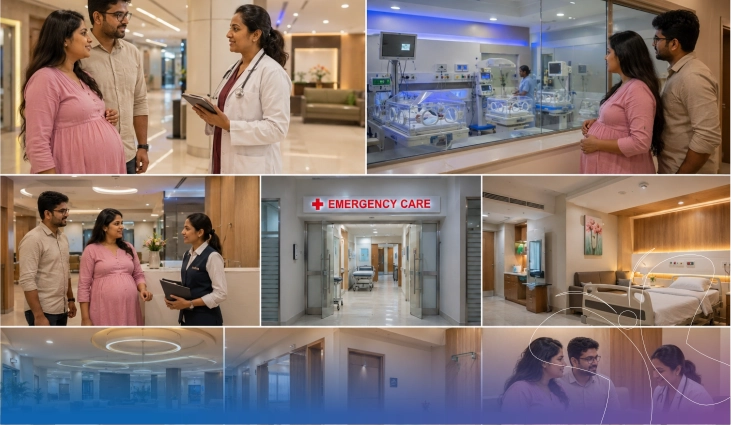
- Choose a NICU hospital in Rajkot whose level of care matches the anticipated clinical risk — if antenatal care has identified preterm birth as likely or a congenital abnormality has been detected on scan, the delivery facility's NICU capability should be confirmed before labour, not assessed at the point of an emergency.
Conclusion
The decision to admit a baby to a NICU is made because something in that baby's physiology needs clinical support that normal newborn care cannot provide. It is not a failure of the pregnancy or the delivery; it is a recognition that some babies arrive before their systems are fully ready and need the bridge that specialist care provides. Quality of premature care and the right equipment affect survival rates, reduce long-term disability, and support the developmental trajectory that every family wants for their child. In Rajkot, for families delivering a child, the hospital for a potentially complicated delivery is the one whose NICU infrastructure level of care, specialist availability, and cooling and respiratory capability match the risk profile of the pregnancy. Knowing this before labour begins is information worth having.