For many women, the first sign that something has changed is not a missed period but a feeling in the breasts. They become sore, full, heavy and unusually sensitive, sometimes within a week or two of conception. Understanding breast changes during pregnancy helps you tell the difference between your body doing exactly what it should and a symptom that deserves a doctor's attention. Most of what you notice is hormonal and harmless, but a few signs should never be ignored, and knowing which is which brings real peace of mind.
What Normal Breast Changes Look Like in Pregnancy
Rising levels of oestrogen and progesterone prepare the breasts for feeding long before the baby arrives. In the first trimester, tenderness, tingling and swelling are very common, and the breasts may feel as if they have grown a size almost overnight. The nipples become more sensitive and the areola, the darker skin around the nipple, usually widens and darkens further.
As pregnancy advances, you may notice small bumps on the areola called Montgomery glands, which produce an oily substance that keeps the skin supple. Blue veins become more visible under the skin as blood flow increases. From the second trimester onwards, some women see a thick, yellowish fluid leaking from the nipples. This is colostrum, the first milk, and its appearance is normal. Stretching skin can also cause itching and faint stretch marks. A good supportive, non-wired maternity bra and a gentle, fragrance-free moisturiser make a noticeable difference to comfort.
How Your Breasts Change After Delivery
After birth, the breasts usually shift from colostrum to mature milk between the second and fifth day. This is when engorgement is most common: the breasts feel hard, warm and heavy, and the nipples can flatten, which makes latching harder. Frequent feeding, a good latch and gentle hand expression to soften the areola before a feed usually settle things within a day or two. Mild nipple soreness in the first week is common, but pain that continues or cracked, bleeding nipples suggest the latch needs correcting, and a lactation-trained clinician can help quickly.
Breast Lump and Pain During Breastfeeding
A breast lump and pain during breastfeeding is one of the most frequent reasons new mothers call their doctor, and the cause is usually simple. The common explanations are:
- Blocked milk duct: a tender, firm, sometimes wedge-shaped area that often eases after repeated feeding and gentle massage towards the nipple
- Mastitis: inflamed breast tissue with redness, heat, a throbbing ache, fever, chills and flu-like tiredness; it needs prompt treatment, sometimes with antibiotics that are safe during breastfeeding
- Breast abscess: a painful lump that does not respond to treatment or feels fluid-filled; it needs an ultrasound and drainage
- Galactocele: a smooth, painless milk-filled cyst that tends to appear when breastfeeding is slowing or stopping
With mastitis, keep feeding or expressing from the affected side unless your doctor advises otherwise. Whatever the pattern, any breast lump and pain during breastfeeding that does not settle within a week deserves an examination rather than waiting it out.
When a Breastfeeding Lump is a Concern
Lumps are common in lactating breasts because the tissue is full, active and constantly changing, so the answer to this worry is often reassuring. But "common" does not mean every lump can be assumed harmless. A lump that stays in the same place after several feeds, keeps growing, feels hard and fixed, or has no pain at all should be examined. Benign growths such as fibroadenomas can also become more noticeable during lactation.
Breast cancer in pregnancy and breastfeeding is uncommon, but it does happen, and it is often found later because women and even doctors attribute changes to the pregnancy. This is why persistence is the key word. Asking whether a breast lump while breastfeeding is normal is a good instinct, and a simple clinical examination with an ultrasound, which is safe for mother and baby, can usually answer it within a single visit.
Signs That Need a Doctor
Please see a doctor promptly if you notice any of the following:
- A hard, painless or fixed lump that does not change from week to week
- Bloody or brown discharge from one nipple
- A nipple that turns inward when it was not like that before
- Dimpling, puckering or an orange-peel texture of the skin
- A red patch that persists, or a sore on the nipple that does not heal
- Swelling or a lump in the armpit
- Severe pain with fever and a red, hot area, which may be mastitis
So when it comes to which breast changes during pregnancy require medical attention, the pattern to remember is one-sided, persistent and unexplained. Generalised tenderness in both breasts is almost always hormonal. A single, stubborn change in one breast is worth checking, even if everything else feels normal.
Ultrasound, Tests and Treatment for Breast Problems
The assessment begins with a conversation and a physical examination. The usual tests and treatments are:
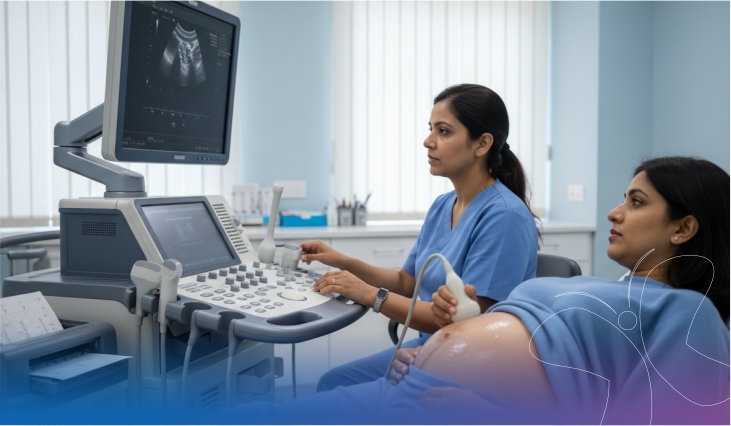
- Ultrasound: the preferred imaging test during pregnancy and lactation because it involves no radiation
- Needle biopsy: can be done safely if a lump needs further testing
- Mammography with shielding: reserved for specific situations
- Blocked ducts and mastitis: feeding techniques, warm compresses before feeds, cold packs after, and pain relief
- Infection: antibiotics that are compatible with breastfeeding
- Abscess: ultrasound-guided drainage
Most mothers go on to breastfeed comfortably for as long as they wish.
Conclusion
Breasts change in pregnancy and breastfeeding because they are doing important work, and most of these changes are normal. What matters is paying attention to the ones that are persistent, one-sided or unusual. Flowrence Hospital, Rajkot, offers examination, ultrasound and guidance for mothers during pregnancy and the breastfeeding period. For lumps, pain, discharge or any change that worries you, the best gynecologist for breast problems in Rajkot is a consultation away, so please do not wait for it to go away on its own. Visit Flowrence Hospital to book an appointment.