Introduction
Many women notice changes in their bodies through their forties, periods becoming irregular, sleep becoming harder to maintain, moods shifting without obvious reason, and a warmth that flushes through at inconvenient times. These changes often go unaddressed for months or years because they are attributed to stress, busy life, or simply getting older. Understanding what perimenopause and menopause actually involve and when symptoms are significant enough to need specialist management means women can access menopause treatment in Rajkot at the right time rather than managing unnecessarily difficult symptoms alone.
What Is the Difference Between Perimenopause and Menopause?
This distinction confuses many women, partly because the terminology is used inconsistently.
Perimenopause is the transitional phase that precedes the final menstrual period. It typically begins in the mid-to-late forties but can start earlier, and it lasts on average four to eight years. During perimenopause, oestrogen levels fluctuate irregularly sometimes high, sometimes low instead of declining smoothly. This fluctuation drives most of the symptoms associated with this life stage. Menstrual cycles may become shorter, then longer, and then unpredictable. Periods may be heavier or lighter than before.
Menopause is defined as twelve consecutive months without a menstrual period. It marks the end of ovarian follicular activity. The average age of natural menopause in Indian women is slightly earlier than the global average. After that point, a woman is postmenopausal a phase that lasts the rest of her life and carries its own health considerations.
Common Symptoms of Perimenopause and Menopause
-
Irregular periods — cycles that vary in length, frequency, or flow
-
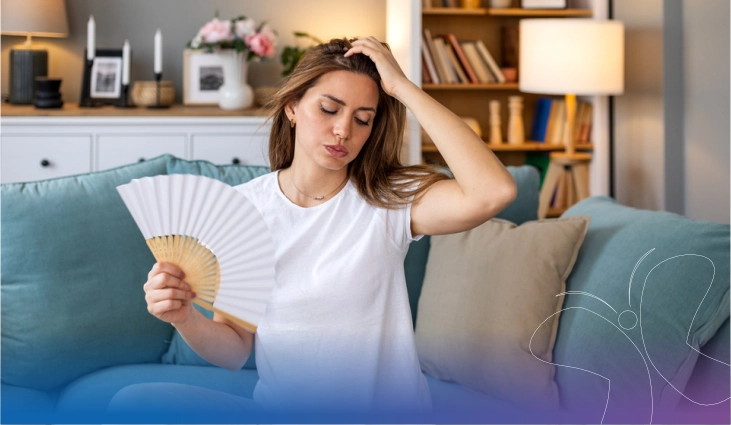
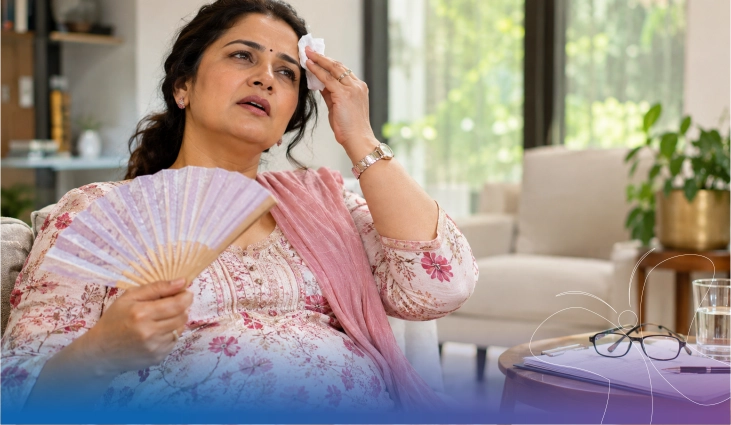
Hot flashes — sudden warmth spreading across the chest, neck, and face, sometimes with sweating
-
Night sweats — hot flashes occurring during sleep, disrupting rest
-
Sleep disturbances — difficulty falling asleep or maintaining sleep independently of night sweats
-
Mood changes — irritability, anxiety, low mood without an obvious cause
-
Brain fog — difficulty with concentration or word-finding that wasn't present before
-
Vaginal dryness and discomfort — due to declining oestrogen affecting vaginal tissue
-
Reduced libido
-
Joint aches — often attributed to other causes, but oestrogen decline affects joint lubrication
-
Hair thinning and skin changes
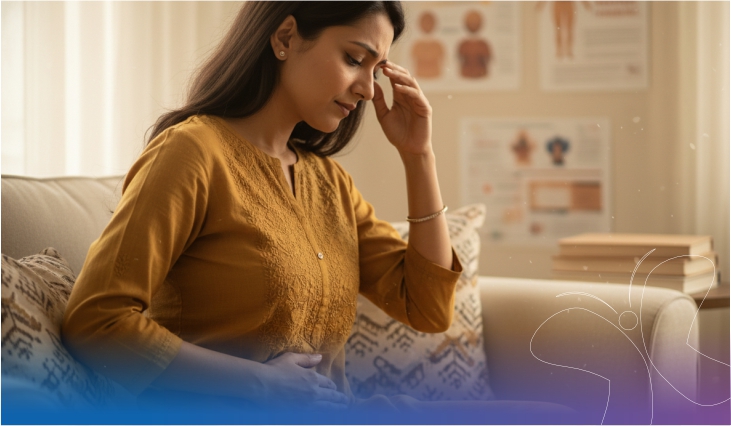
Not all women experience all of these, and symptom severity varies enormously. Some women move through the transition with minimal disruption; others find it significantly affects quality of life, work, and relationships. The menopause hormone consultation helps identify which symptoms are oestrogen-related and which need investigation for other causes.
Hormone Testing — What Is Done and What It Shows
In perimenopause, hormone levels fluctuate so much that a single blood test result can be misleading. FSH (follicle-stimulating hormone) rises as the ovaries respond less to pituitary signals, and a level above 40 IU/L on two occasions at least four to six weeks apart in a woman over 45 with relevant symptoms supports a clinical diagnosis of menopause. Oestradiol levels fall but fluctuate significantly in perimenopause. AMH reflects ovarian reserve and can help indicate how far through the perimenopause transition a woman is. Thyroid function tests are routinely checked because thyroid disorders produce overlapping symptoms fatigue, mood changes, hair thinning, and weight change – that can mask or mimic menopause.
A best gynecologist for menopause in Rajkot will interpret hormone results in the context of symptoms, age, menstrual history, and risk factors rather than treating a number in isolation.
Treatment Options
Hormone replacement therapy
HRT remains the most effective treatment for vasomotor symptoms, hot flashes and night sweats, and for the genitourinary symptoms of menopause. Modern evidence supports its safety in healthy women under 60 who are within ten years of menopause, with the benefit-risk balance clearly favourable for symptom management. The formulation, route, and dose are individualised based on the woman's symptom profile, her uterine status, and her personal and family medical history.
Non-hormonal options
For women who cannot or choose not to use HRT, evidence-based non-hormonal options include certain antidepressants (particularly SSRIs and SNRIs), gabapentin, and cognitive behavioural therapy for menopausal symptoms. Local vaginal oestrogen for genitourinary symptoms is often suitable even when systemic HRT is not.
Bone and cardiovascular health
Oestrogen decline accelerates bone loss. DEXA bone density assessment is recommended for women at risk of osteoporosis. Cardiovascular risk also increases after menopause, making blood pressure monitoring, lipid assessment, and lifestyle guidance part of comprehensive menopause care.
Conclusion
Perimenopause and menopause are natural life transitions, but that doesn't mean significant symptoms have to be endured without support. Effective treatment options exist for hot flashes, sleep disruption, mood changes, and the physical changes caused by declining oestrogen. Flowrence Hospital in Rajkot provides specialist gynaecological consultations for women navigating perimenopause and menopause, including hormone assessment, individualised treatment planning, and long-term health monitoring. For women looking for the best gynaecologist for menopause in Rajkot, Flowrence Hospital offers evidence-based, compassionate specialist care.